
Function intertwined with Ecological value: Viewbank’s native species oasis.
This project is currently in progress. Focusing on functionality for family car parking and native biodiversity to appeal towards birds, insects, frogs and other small creatures that meander through the neighbourhood.
A discussion on design: Habitat and Functionality in a suburban space.
A small garden can function like a carefully planted woodland edge. Even when the footprint is modest, with the right mix of species, structure, and seasonal rhythm creates habitat layers that behave like a miniature ecosystem rather than just a decorative strip of plants.
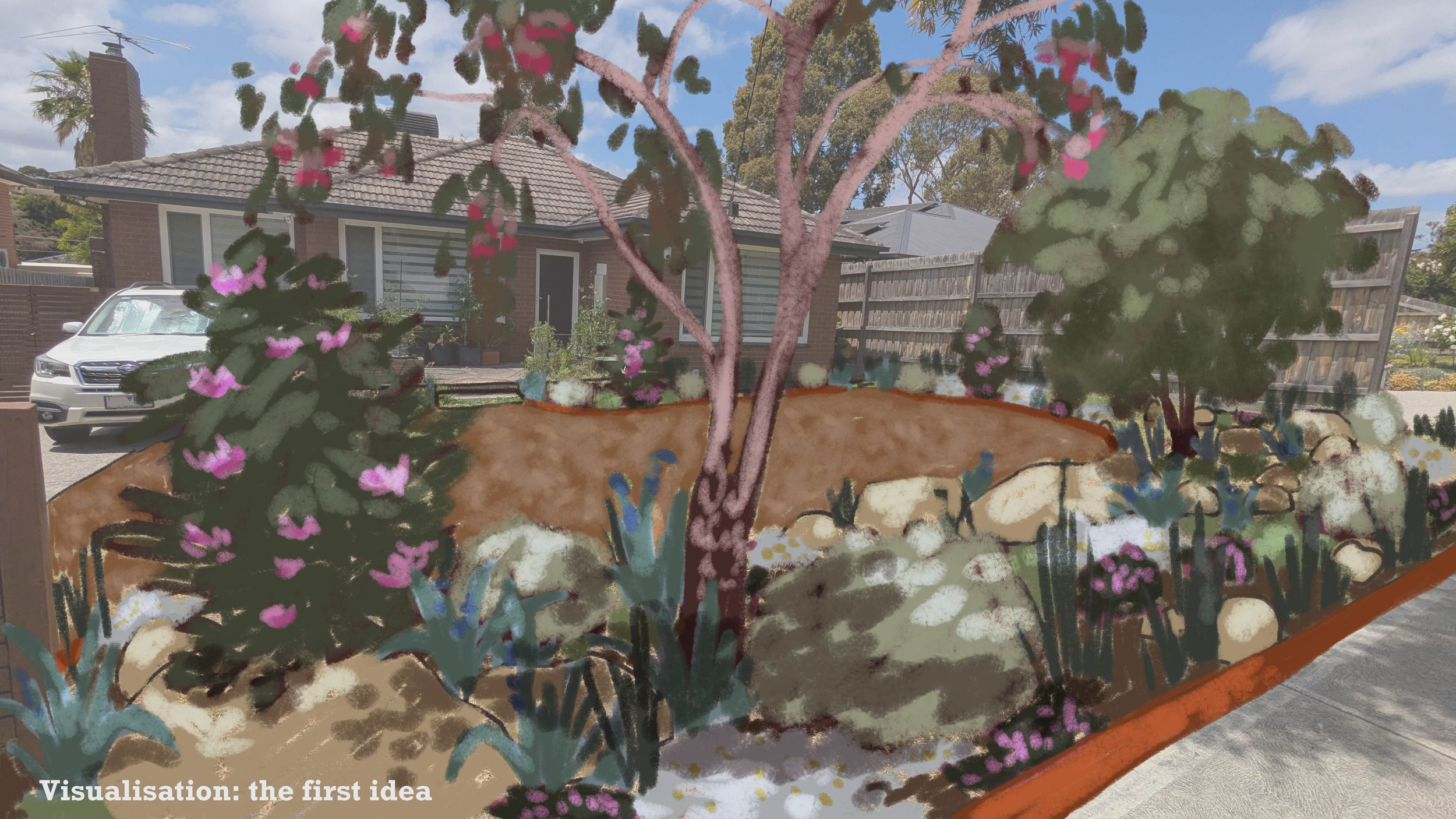
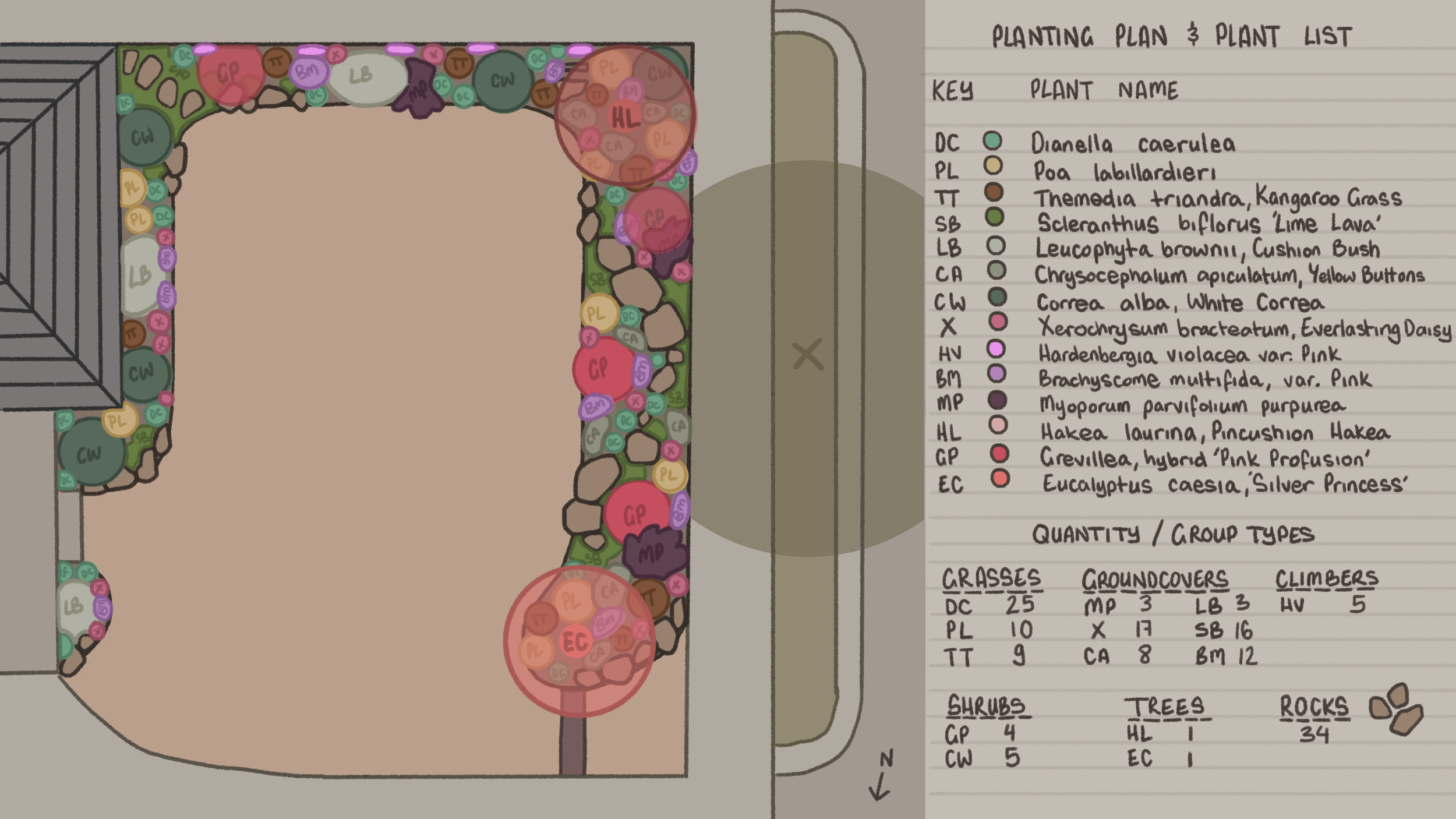
In this first design, the planting wraps around the gravel parking area like a living boundary. Instead of a flat lawn that offered little shelter or food, the garden now contains several vegetation layers: trees, shrubs, grasses, groundcovers, and climbers. Each layer occupies a slightly different ecological niche, much the way plants sort themselves in a natural bushland margin.
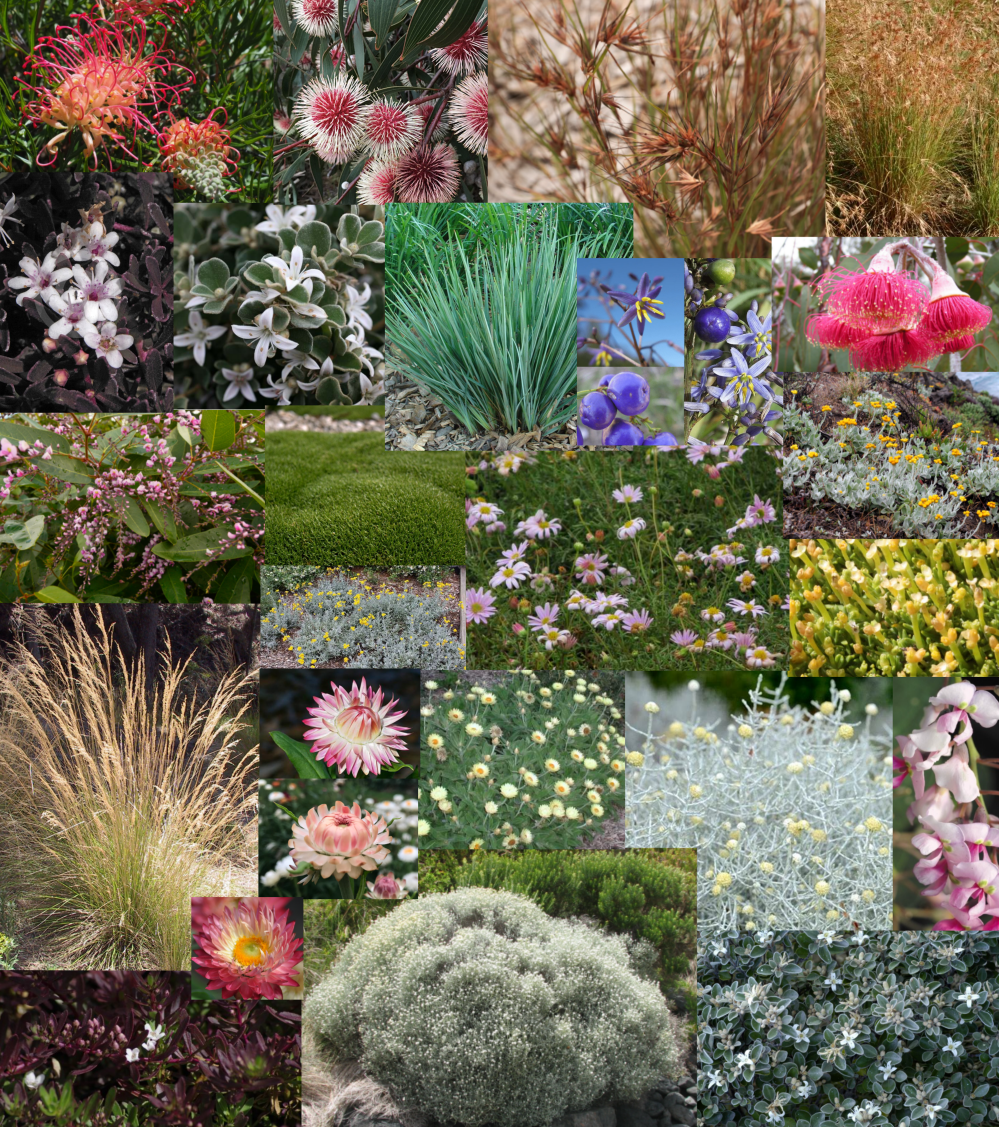
The canopy trees Hakea laurina and Eucalyptus ceasia act as the dominant ecological anchors. Their flowers provide nectar for honey eaters, native bees and other pollinating insects during cooler seasons when food sources can be scarce. Their branches offer perching points and protective cover for small birds moving through the urban landscape of the suburbs.
Below this layer, flowering shrubs such as Correa alba and Grevillea ‘Pink Profusion’ function as the main nectar engine of the garden, as well as providing beautiful cut flower stems for the family. Correa flowers are particularly important during autumn and winter, feeding wildlife while most other flowering plants become dormant.
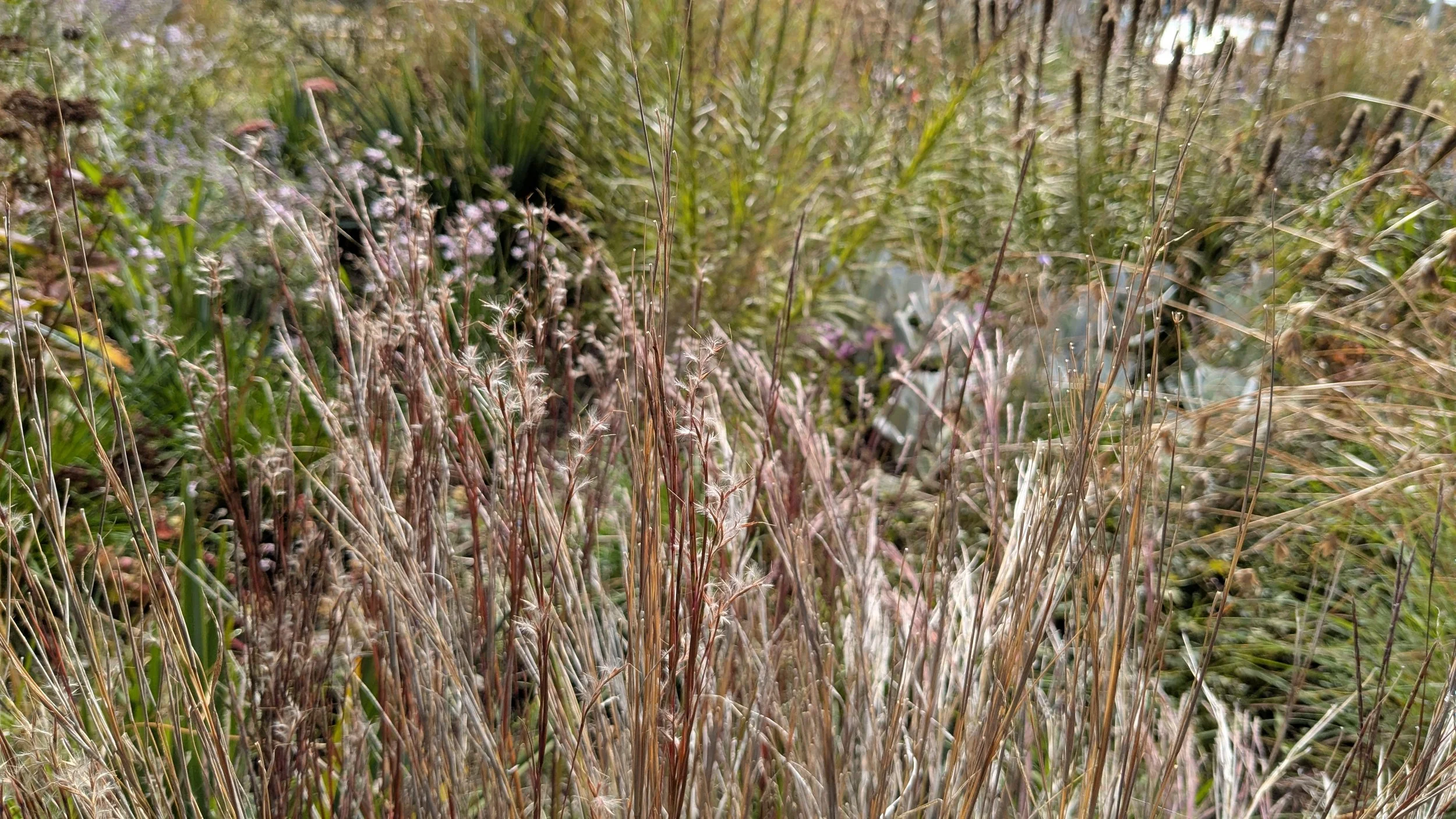
My personal favourite layer is the grasses layer. Native grasses like Poa labillardieri and Themedia triandra form tussocks that mimic the structure of the natural grasslands of Victoria. These clumps create cool, protected spaces at ground level for insects and small reptiles like everyones favourite Blue Tongue lizard; of which this family have a resident Blue Tongue in their back garden. Many beneficial insects use these grasses as breeding habitat, and birds forage through them for seeds and bugs.
The lower flowering plants provide a continuous supply of pollen and nectar for smaller pollinators like native bees, hoverflies, and beetles. Because species like Xerochrysum bracteatum, Chrysocephalum apiculatum, and Brachyscome multifida flower across long periods of the year, they help ensure insects can move through the garden at different times of the year rather than only a short blooming window.
At ground level - the soil surface - Spreading groundcovers such as Myoporum parvifolium and Scleranthus biflorus knit the planting together. They stabilise the soil, reduce weed invasion, and maintain moisture around the root zone as a living mulch. This layer of plants is essential to supporting soil organisms: fungi, microbes, worms and insects, thus building a healthier soil over time.
The climber Hardenbergia violacaea provides a vertical structure along the fence, producing early season flowers that feed pollinators at the end of winter when food is low. It also adds a design element of softness to the harsh structure of the tall wooden fence, making the garden appear as if it is in a more natural and wild space rather than the middle of suburbia.
From a design point of view, the garden works balancing ecological function with practical human use. Sure, it’s one of the more ‘boring’ uses of space - parking cars - but even the gravel is doing its part in allowing rainwater to soak in and infiltrate the soil rather than run off.
This works perfectly for this property as the landscape slants down at a slight angle, and any rainwater runoff flows across the driveway into the neighbours property causing flooding. This solution helps to reduce the risk of this overlooked consequence of the initial build in 1975.
Rock placement mimics natural microhabitats, creating shaded crevices where insects and small animals can shelter.
The result is a front yard that performs several roles at the same time. It provides parking and circulation for people, but it also becomes a small biodiversity corridor within the neighbourhood.
Even though the garden occupies a relatively small footprint, its layered planting, year round flowering and native species selection allow it to support pollinators, birds and soil life far more than the former lawn ever could.
In ecological terms, it behaves less like a garden bed and more like a tiny slice of local bushland reintroduced into a suburban setting. It’s art in the form of life.