
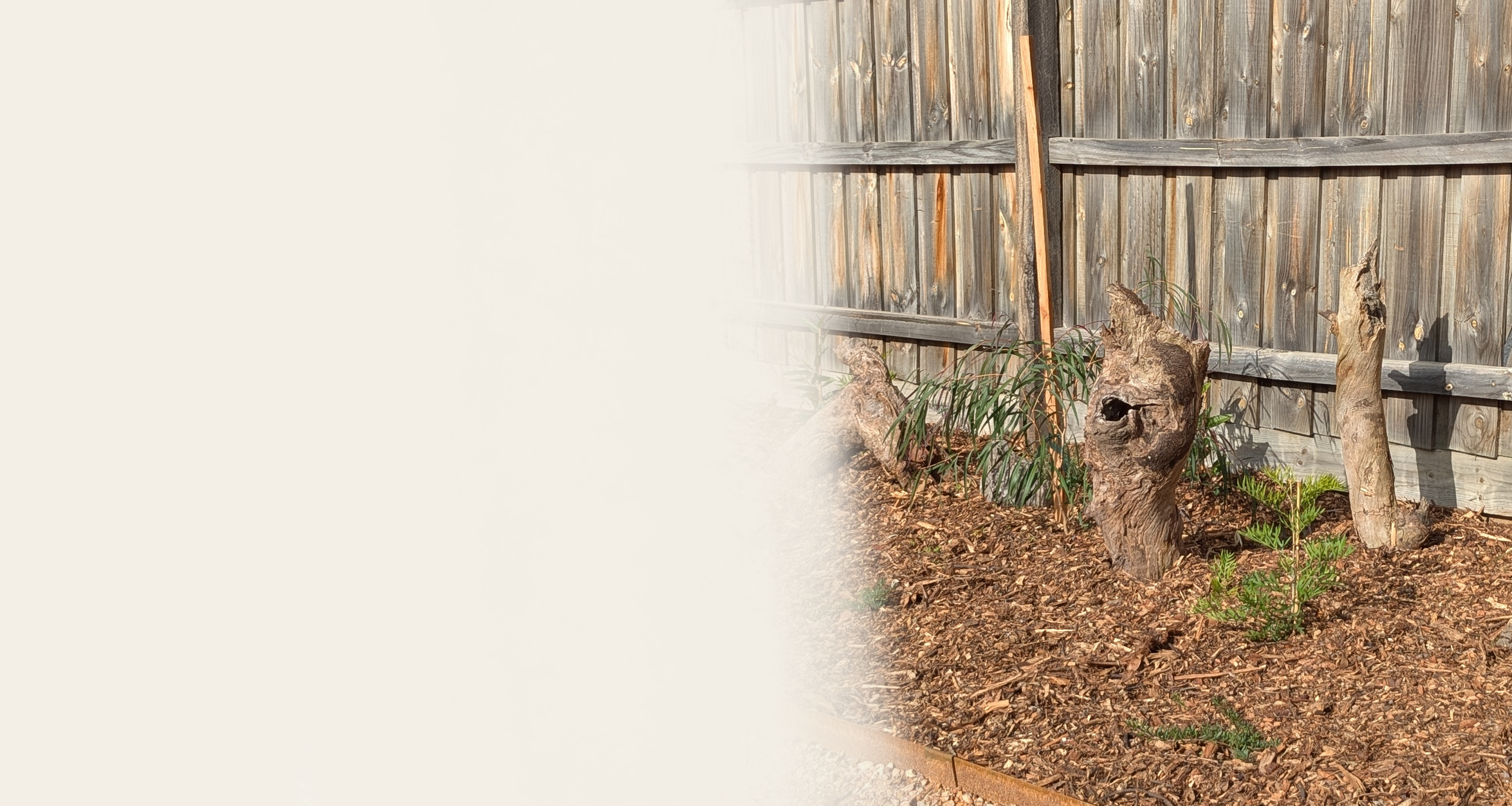
How do you turn a car park into habitat?
The design journey behind a waterwise native garden in Viewbank
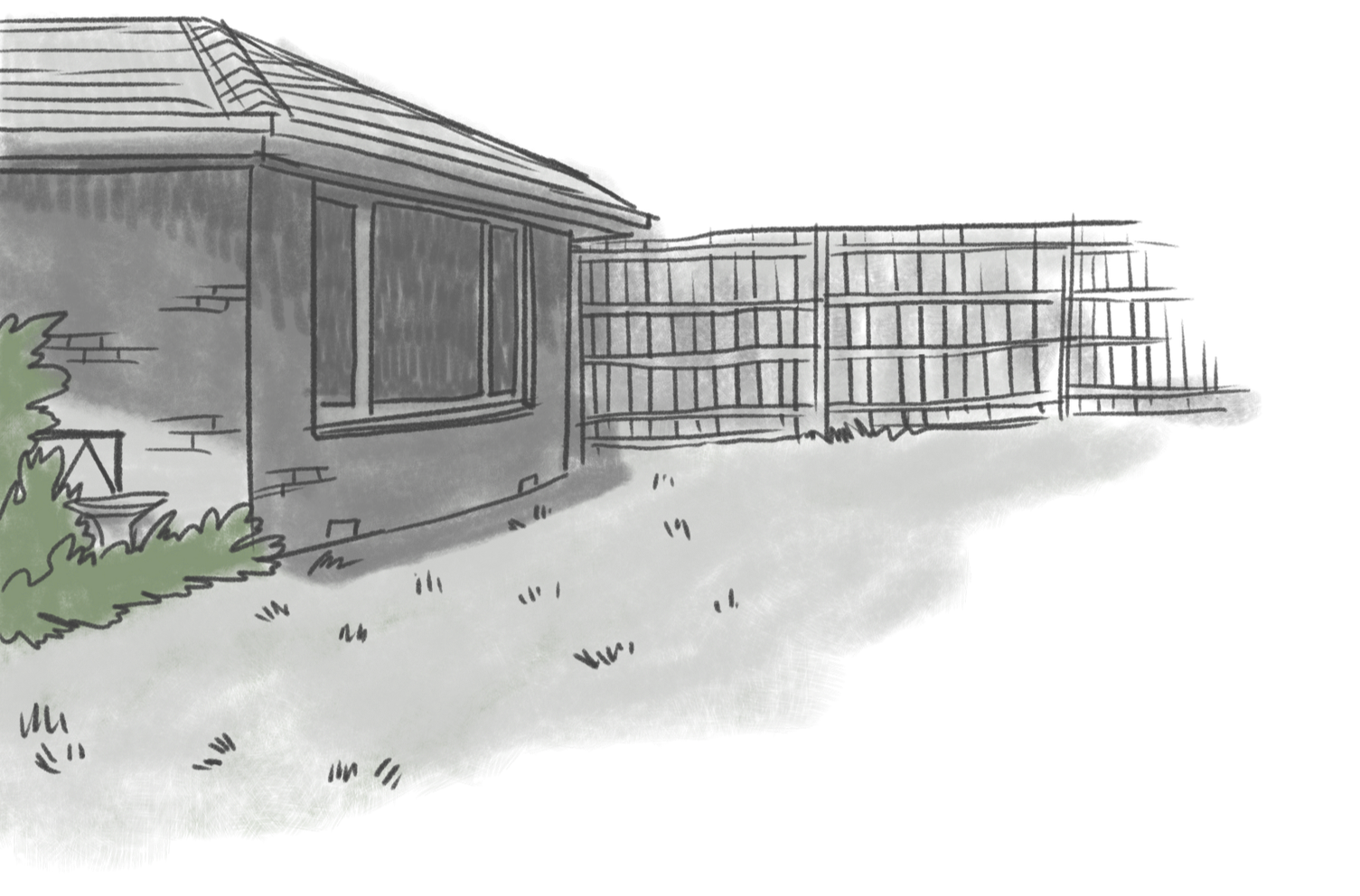
The Site
The front garden with nothing interesting going on. A compacted lawn used for parking, mud in the winter and dead grass in the summer. Ecologically dead and miserable to maintain.
WHAT I NOTICED:





Water runs downhill towards the neighbour, bringing runoff debris into storm drains
Space needed for two cars
A tall, strong fence looking for a better purpose
Strong exposed sun and late afternoon shade
Existing lawn offers no habitat and is eternally struggling
Dry, compacted clay soil
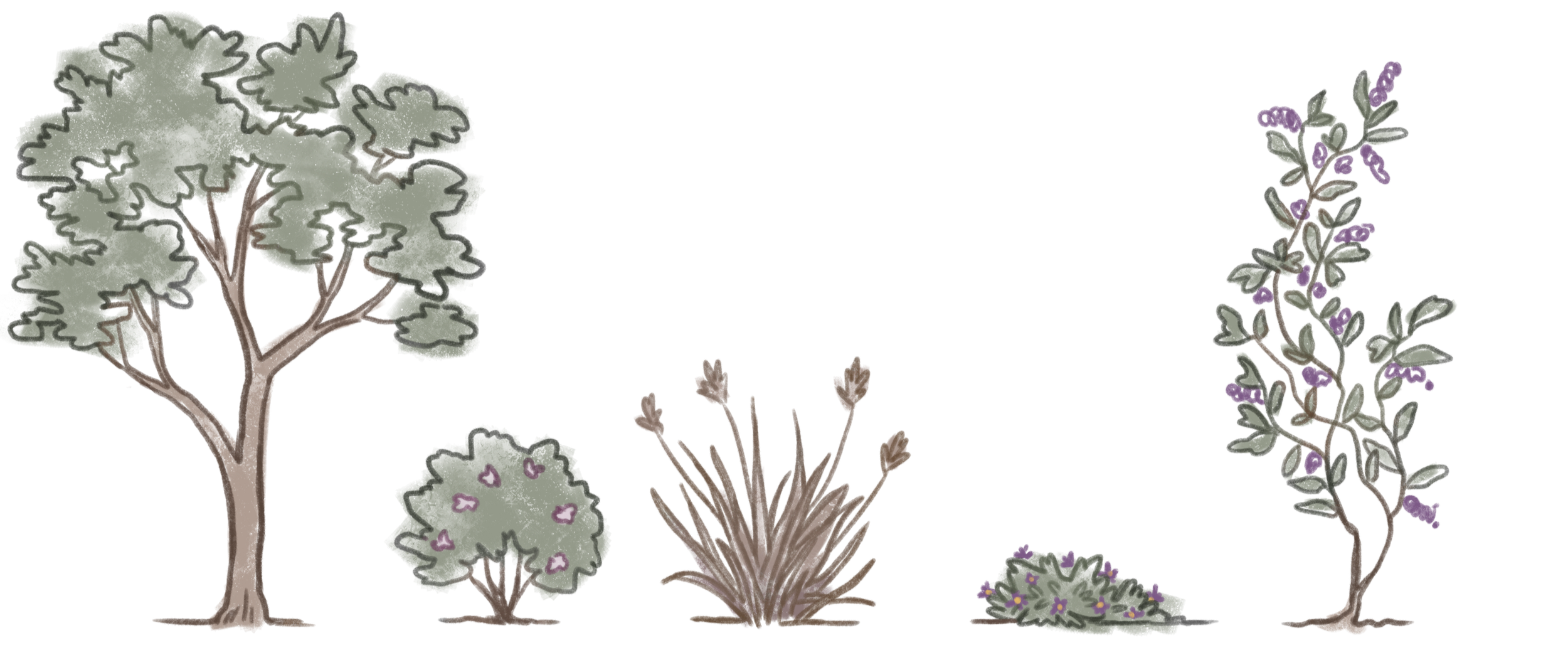
— BUILDING HABITAT INTO A SUBURBAN YARD —
Create structure and food sources
CANOPY
Provides shelter and shade
SHRUBS
GROUNDCOVERS
GRASSES
Add movement and habitat
Protect the soil and create habitat
CLIMBERS
Adds vertical interest
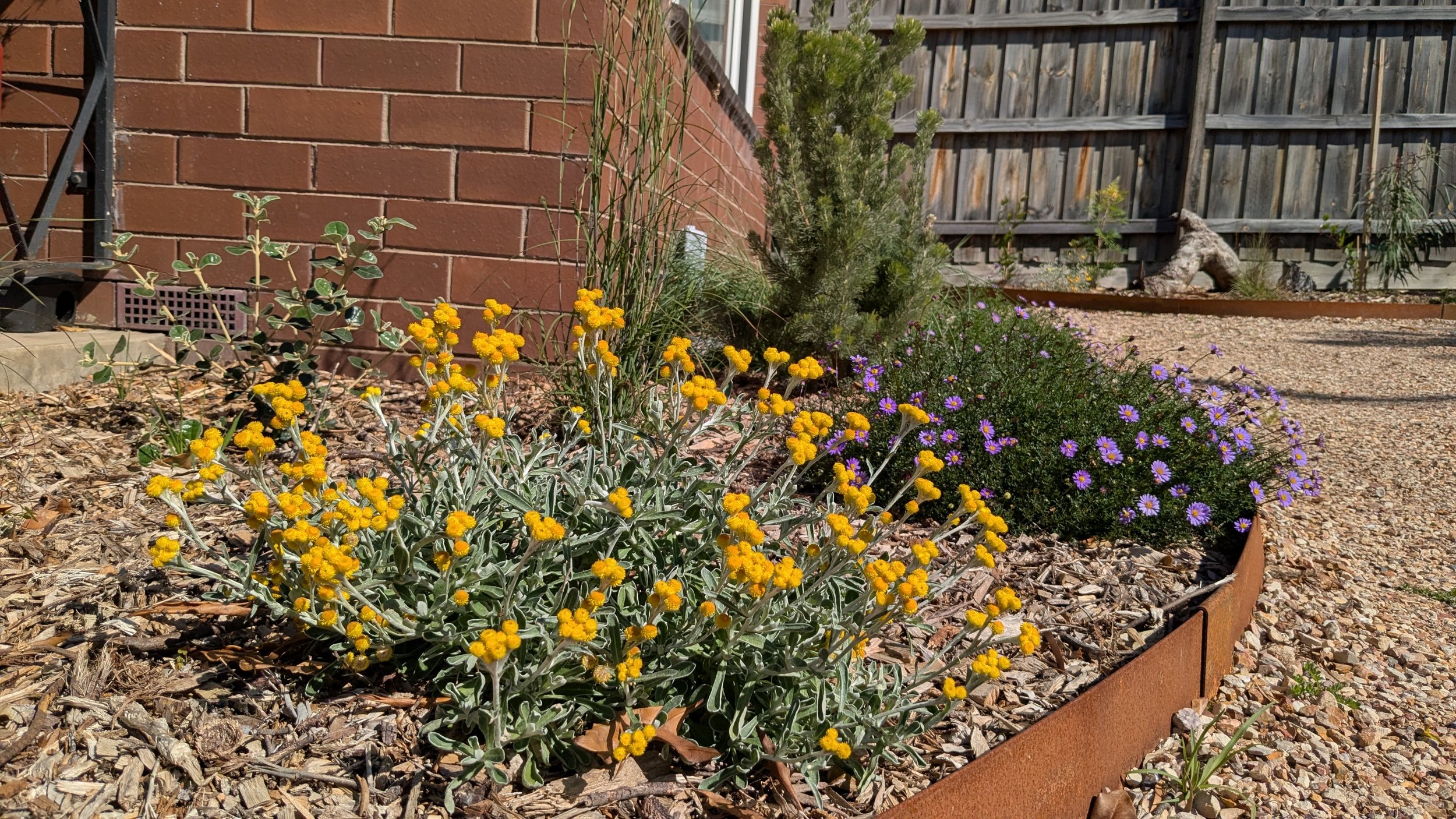
The Question
Could the driveway become a part of the ecosystem?
The Design Journey
First Ideas
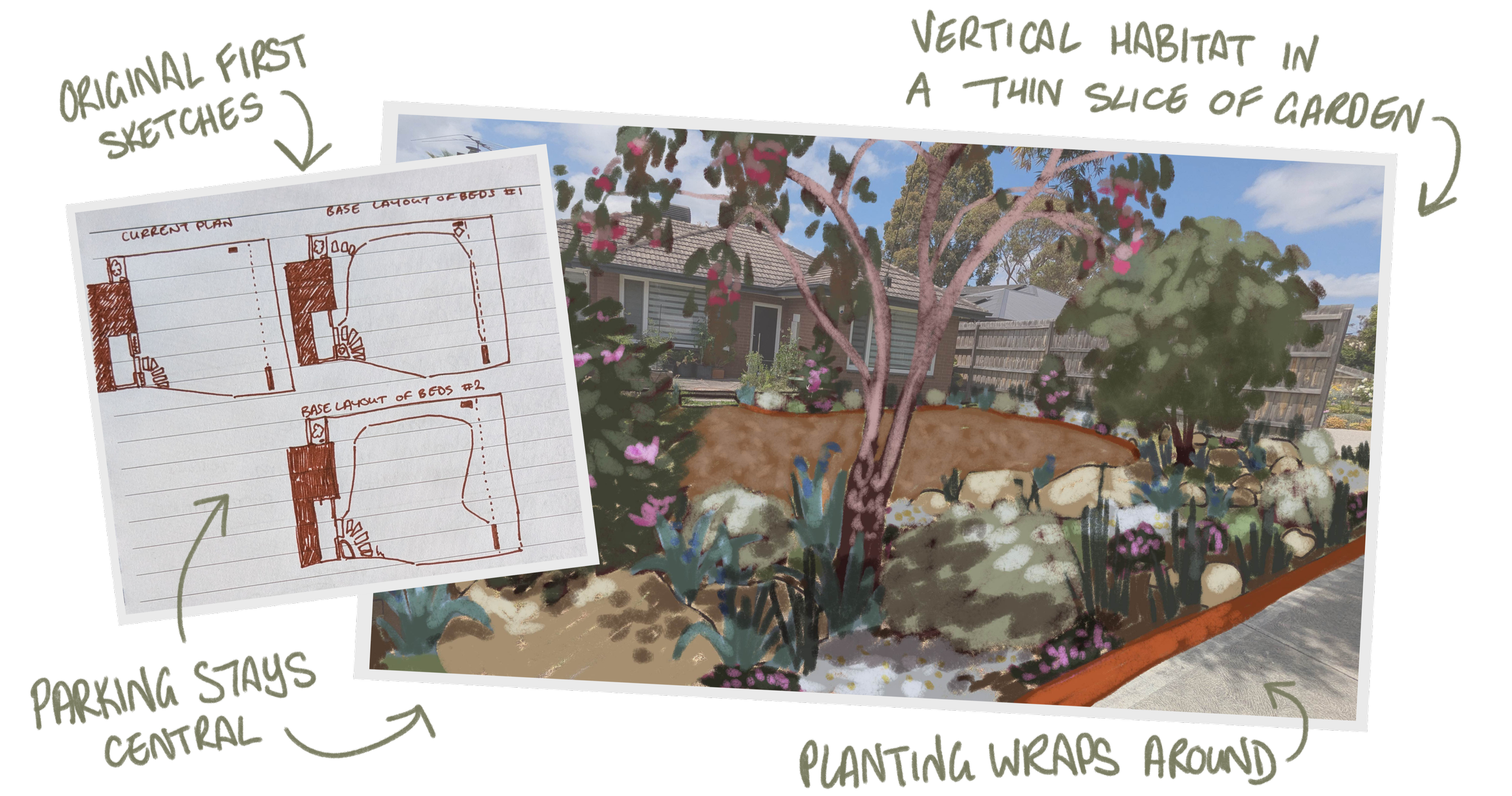
Once I understood what I wanted the garden to achieve, I began sketching.
At this stage, I wasn’t thinking about exact plant quantities or locking in every species. I was trying to work out the broader shape of the garden first: where the vegetation should sit, how the cars would move through the space, where water might slow down, and how the planting could feel connected rather than broken into separate garden beds.
The existing front yard had a very clear practical centre — the parking area — so I started by working around that rather than fighting it.
Instead of putting narrow strips of planting around the edges, I wanted the garden to feel as though it was wrapping around the usable space.
Habitat Comes First
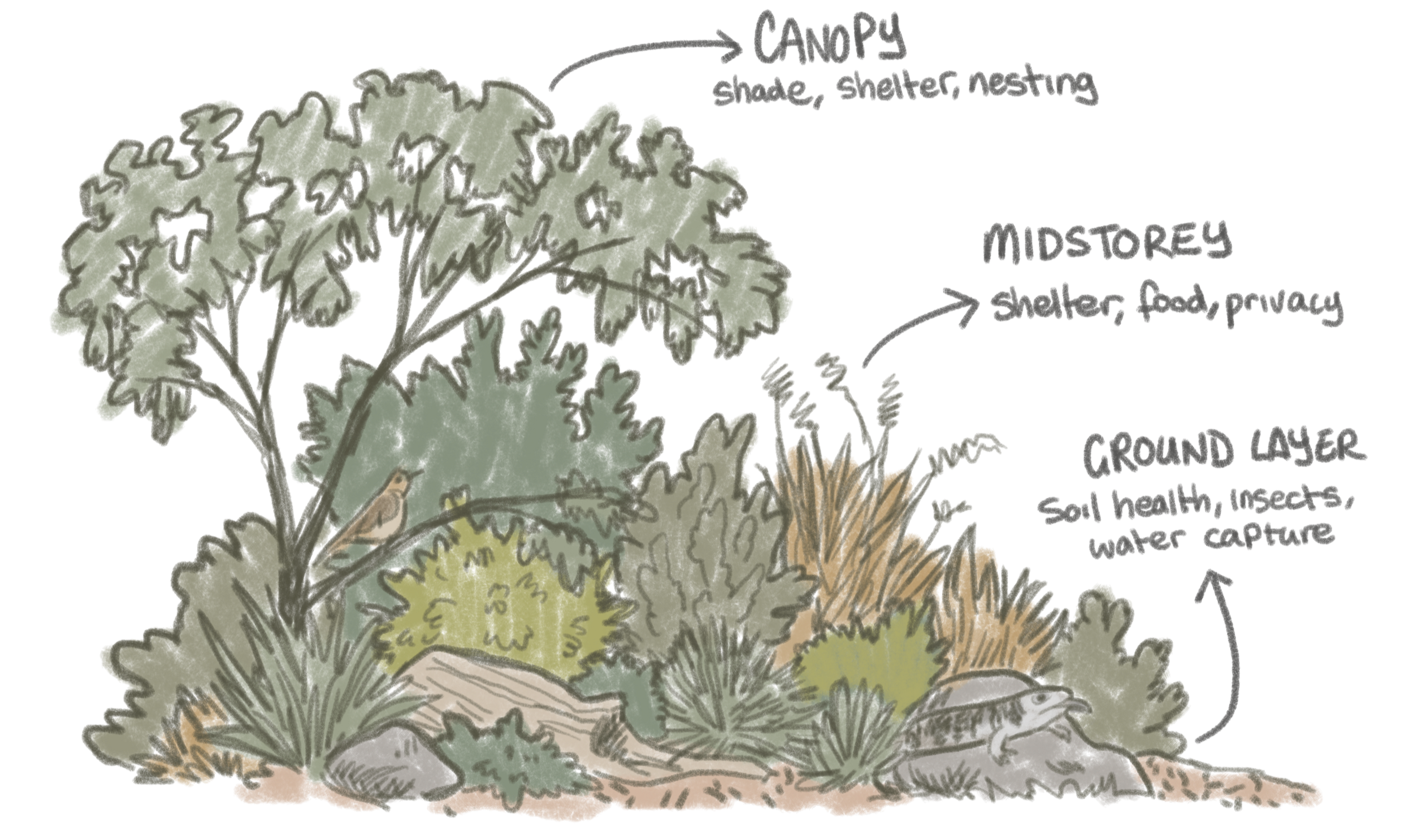
Once the shape was working, I focused on figuring out the layers needed. Since this garden was designed from a blank start, I had to re-create each natural layer of habitat to build an ecosystem.
Layered habitats bring gardens to life, marsupials, birds, reptiles, insects, worms and microbes.
Plant selection
The right plant in the right spot
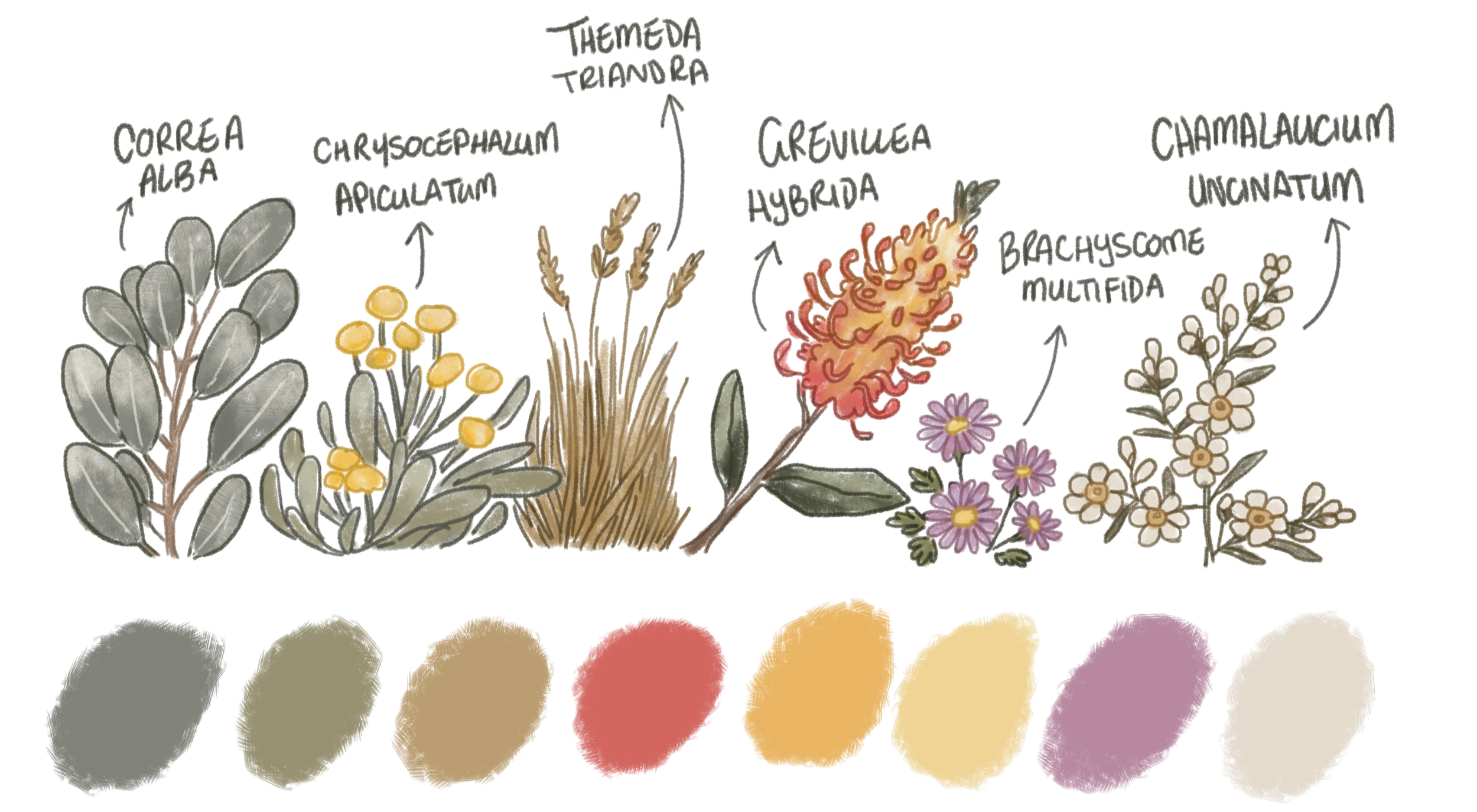
The plant palette was shaped by the site conditions. Focusing on clay tolerant, full sun loving, low water needing native plants that also support wildlife. Each plant brings resilience, beauty, and habitat value, helping to create a diverse, sustainable living garden.
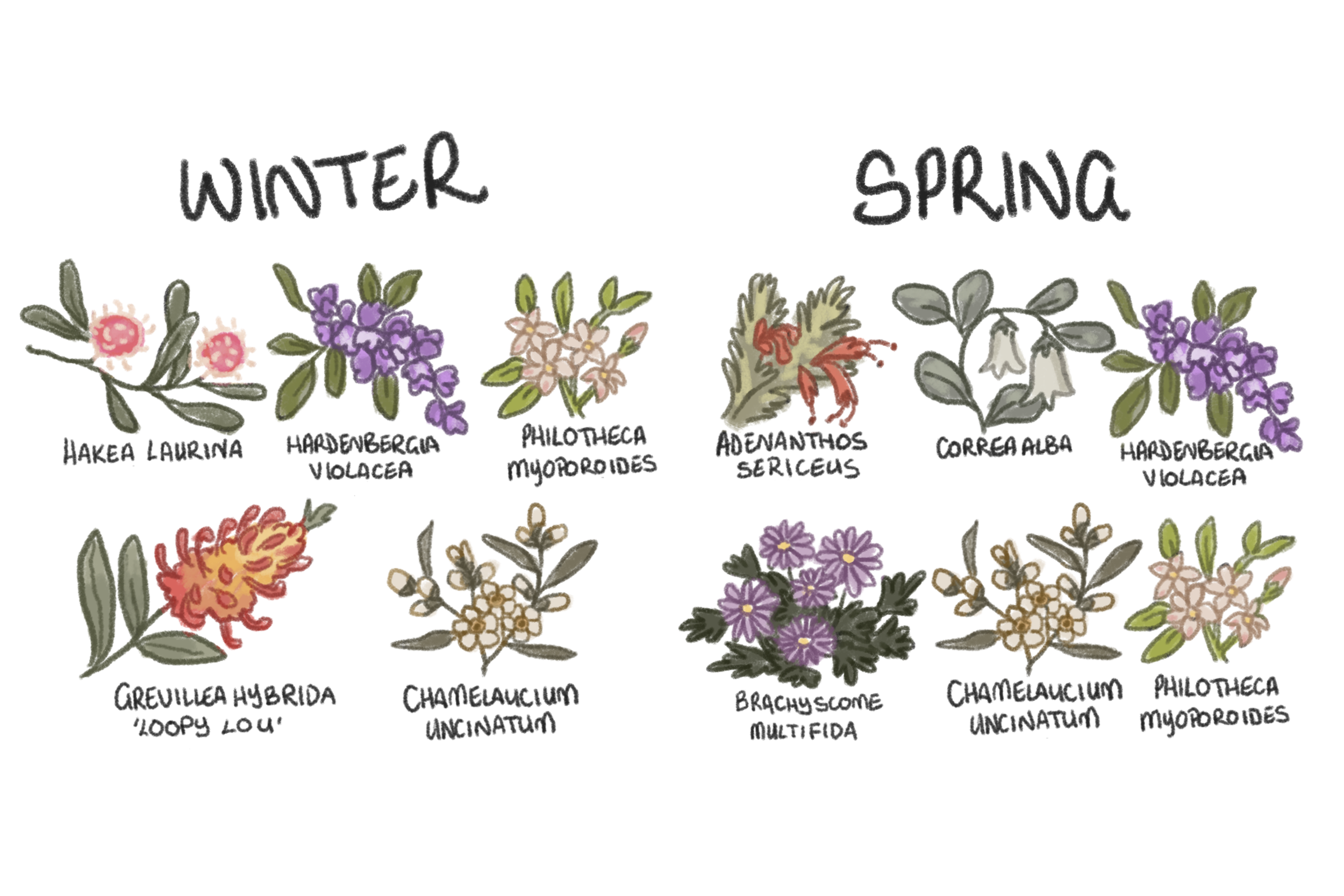
After choosing for hardiness, I could choose for colour.
A soft, natural palette that works with the bush aesthetic the client has in mind.
I picked plants that flower at different times of year, so that there would always be something in flower. Seasonal colour, mixture of textures, structure and movement were all considered in the plant selection.
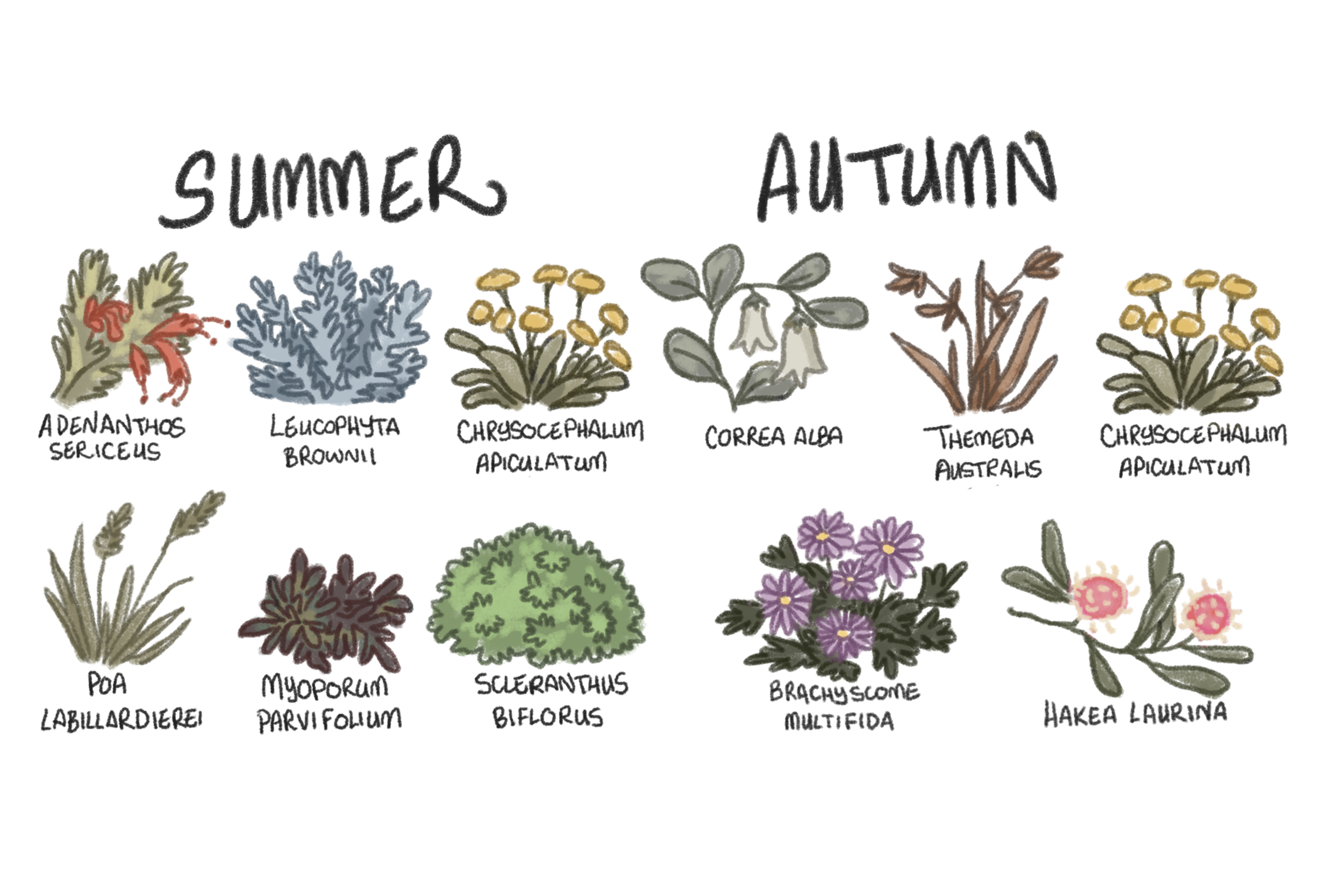
Bringing It All Together
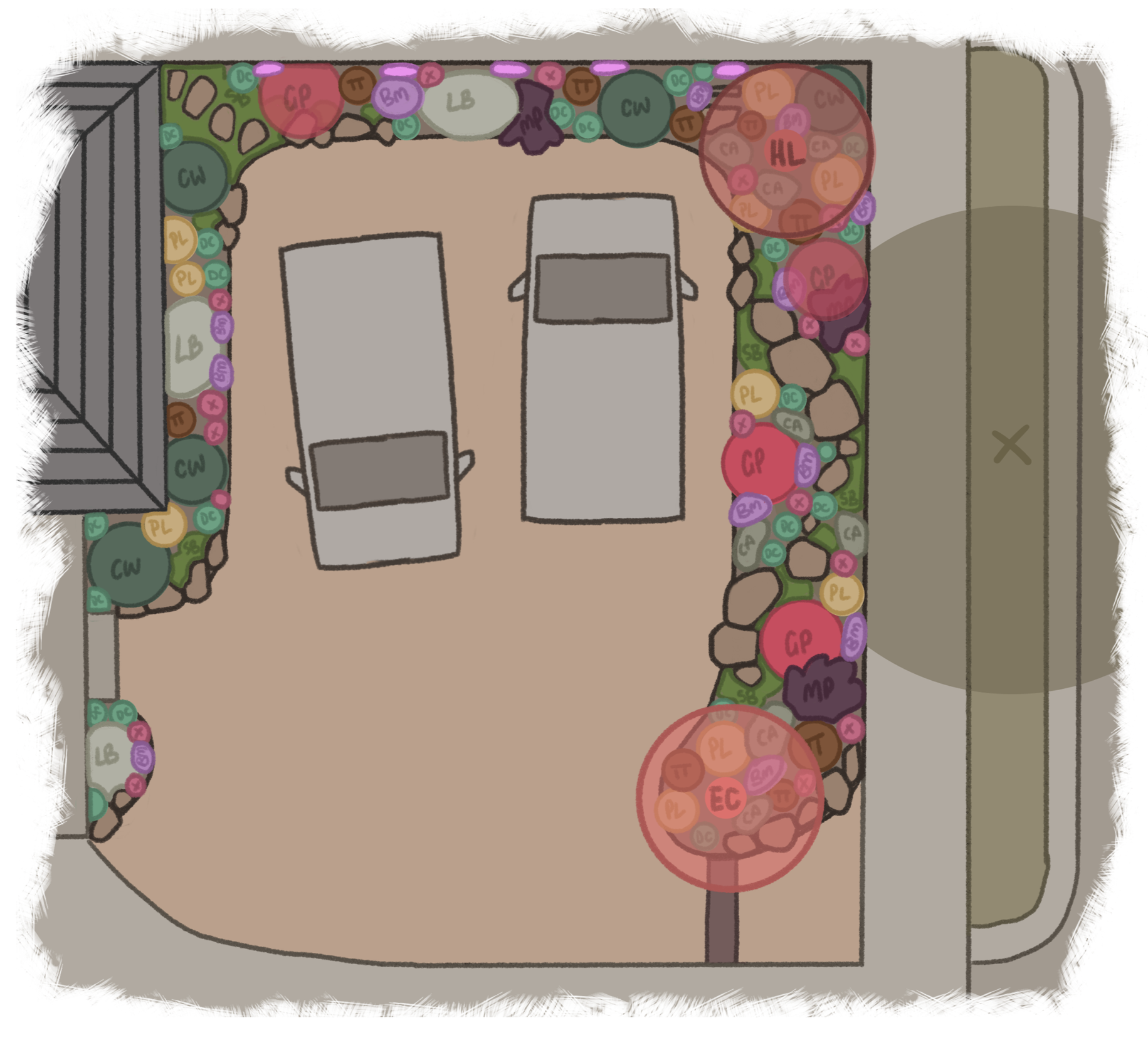
A final design for a colourful, wild-life friendly driveway garden
A layered, low maintenance planting scheme that softens the space, frames the driveway, and brings year round interest.